By Bill Huston, WilDar Golf Carts & Trailers
Walk around any neighborhood activity center today and you’ll see more golf cart and LSV brand names than you can keep straight — new logos every season, most of them on vehicles that look a lot alike. Sometimes I’m asked which ones will still be around in five years. I can’t tell them. But I can tell them what every other vehicle industry in this country did at this exact stage, because it’s on the record, and that record is what we’ll talk about over the next several articles.
The street-legal cart has been a federal motor-vehicle class since 1998; it is a vehicle industry, and vehicle industries have a pattern. This piece lays out the pattern. The articles that follow take questions a buyer faces today — a certified vehicle versus one that isn’t; a converted cart versus a factory-certified LSV; a brand that stands behind its product versus one that’s gone; a vehicle whose real manufacturer you can name versus one you can’t — and hold it up against the time the automobile industry faced the same question. Those businesses and the buyers of their era already ran every one of these experiments. We just have to read the results.
Automobile and Motorcycle Manufacturers – Establishing Brands, No Easy Task
Here’s the number every buyer should keep in the back of his mind. By one commonly cited tally, more than 1,800 companies built automobiles in the United States between 1896 and 1930. The first federal census count, in 1899, found thirty manufacturers building about 2,500 vehicles; some 485 more companies entered in the next ten years. By 1976, eleven were left.
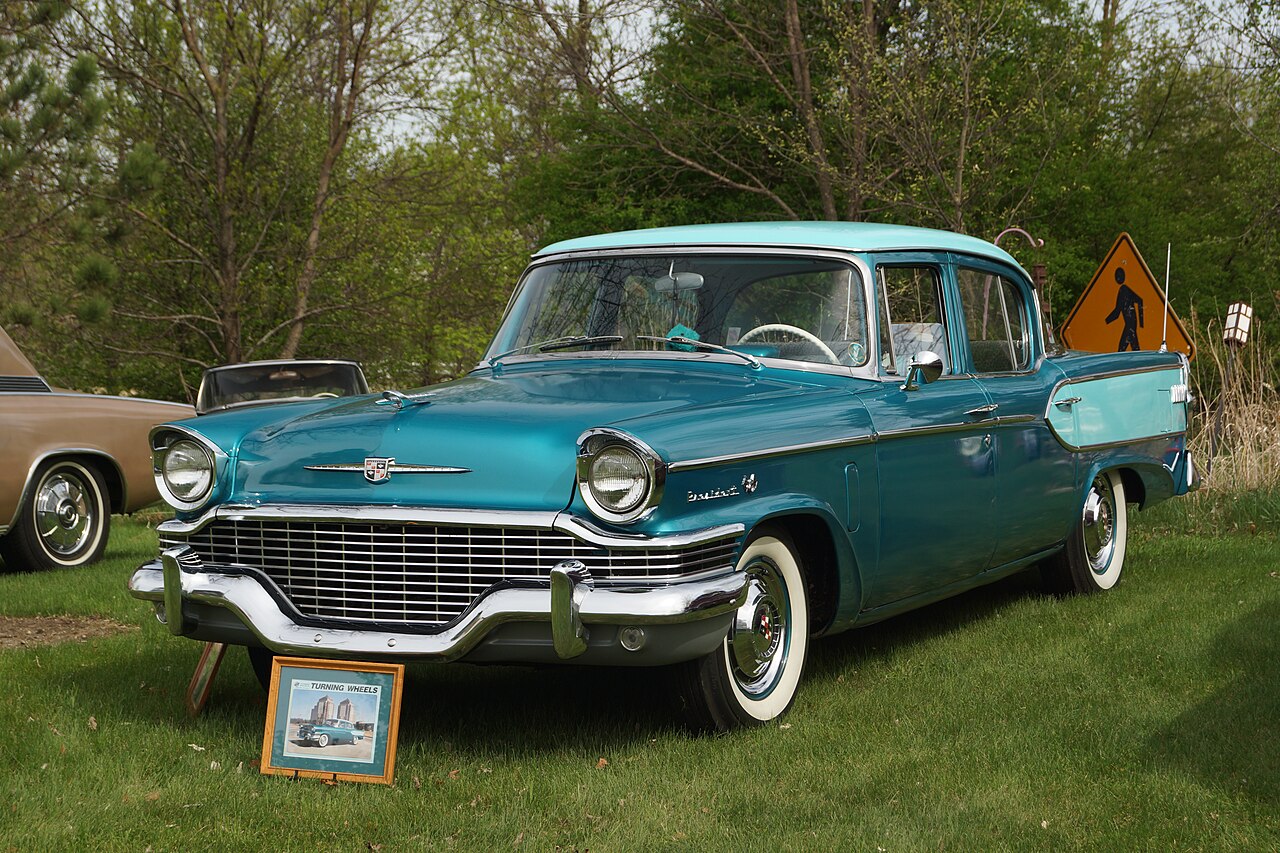
The names that failed were not all small. Packard was founded in 1899 and built some of the finest cars in the world; it was gone by the late 1950s. Studebaker made wagons from 1852 and cars from 1904; its last car rolled out in the late 1960s. And then there are the ones nobody remembers: American Waltham, 1898 to 1899. Auto Tricar, 1914 — one year. American Underslung, 1905 to 1914. Each of them sold vehicles to real people who expected parts and service afterward.
Motorcycles ran the same curve, faster. Indian started in 1901 and Harley-Davidson in 1903; by 1911 more than a hundred motorcycle brands were on the market, some sold by mail through Sears and Montgomery Ward. By 1931, two remained. Indian itself went bankrupt in 1953.
Golf carts in the 1950’s and 1960’s
Golf carts were no exception. Marketeer built its first electric golf cart in 1951. E-Z-GO and LEKTRO started in 1954, Cushman in 1955, Club Car in 1958, Taylor-Dunn and Harley-Davidson in the early ’60s, with Westinghouse and others alongside. Then the shakeout. Golfdom reported in August 1975 that Cushman — a market leader since the 1930s — would stop building golf cars after that year, leaving about sixty dealers and distributors without a golf car to sell, and that Otis had already left for lack of sales. Harley-Davidson sold its golf car business to Columbia ParCar in 1982. The Cushman name ended up under Textron, E-Z-GO’s owner. If you’ve wondered why three brands owned the golf course for forty years, that’s why: everyone else left, merged, or was bought.
Other industries – same story: e-bikes, China’s car industry, and ATVs
Three-wheel ATVs were everywhere in the mid-1980s. In April 1988 the major distributors signed federal consent decrees agreeing to halt their distribution; none has been built since. The four-wheel ATV that survived did so under a standard that is now mandatory federal law. Side-by-sides took a different road: the industry wrote its own voluntary standard beginning in 2010, the federal product-safety agency voted in 2014 to start a mandatory rule, then dropped it after finding at least nine in ten machines sold met the industry’s 2016 version.
China’s car industry is living the American 1910s at full scale. More than 500 companies registered to build electric vehicles there between 2014 and 2019. Roughly a hundred remain, and the consolidation isn’t over. Most of the carts on a Florida showroom floor come from that same manufacturing economy.
And the e-bike business just showed what the end looks like for the customer. VanMoof, the most-hyped brand in that industry, was declared bankrupt in July 2023. Its bikes needed the company’s app and the company’s parts; independent shops wouldn’t open the frames. Owners were left holding an expensive product nobody could service. The brand was eventually bought and revived. The stranded owners didn’t get those months back.
More in this series: Gray-Market Vehicles: The Discount Today, the Cost Tomorrow · What the Law Protects When a Brand Goes Away — and What It Doesn’t · What’s My Golf Cart Worth? How Trade-In Value Is Figured · Golf Cart Warranty: Parts and Labor, or Just Parts?
The brand tiers are on the Best Golf Cart Brands 2026 page.
Sources cited: 49 CFR 571.500 and 63 FR 33194 (June 17, 1998); U.S. Census of Manufactures 1899 as summarized by Encyclopedia.com; Spokesman-Review, Sept. 10, 2005; Auto Round-Up, Mar. 25, 2025; Museum of American Heritage, “Motorcycle Mania”; Rider Magazine on Excelsior-Henderson; Golfdom, Aug. 1975, “After Cushman — What?”; 71 FR 45904 (Aug. 10, 2006) and the 1988 ATV consent decrees; CPSC, “Recreational Off-Highway Vehicles — Termination of Rulemaking” (2016); ROHVA ANSI standard history; Carscoops (Jul. 2025) and CKGSB Knowledge (Jul. 2026) on China’s EV consolidation; Reuters/NPR on VanMoof (July–Aug. 2023).
Featured image: 1957 Studebaker President, photo by Greg Gjerdingen, CC BY 2.0.