
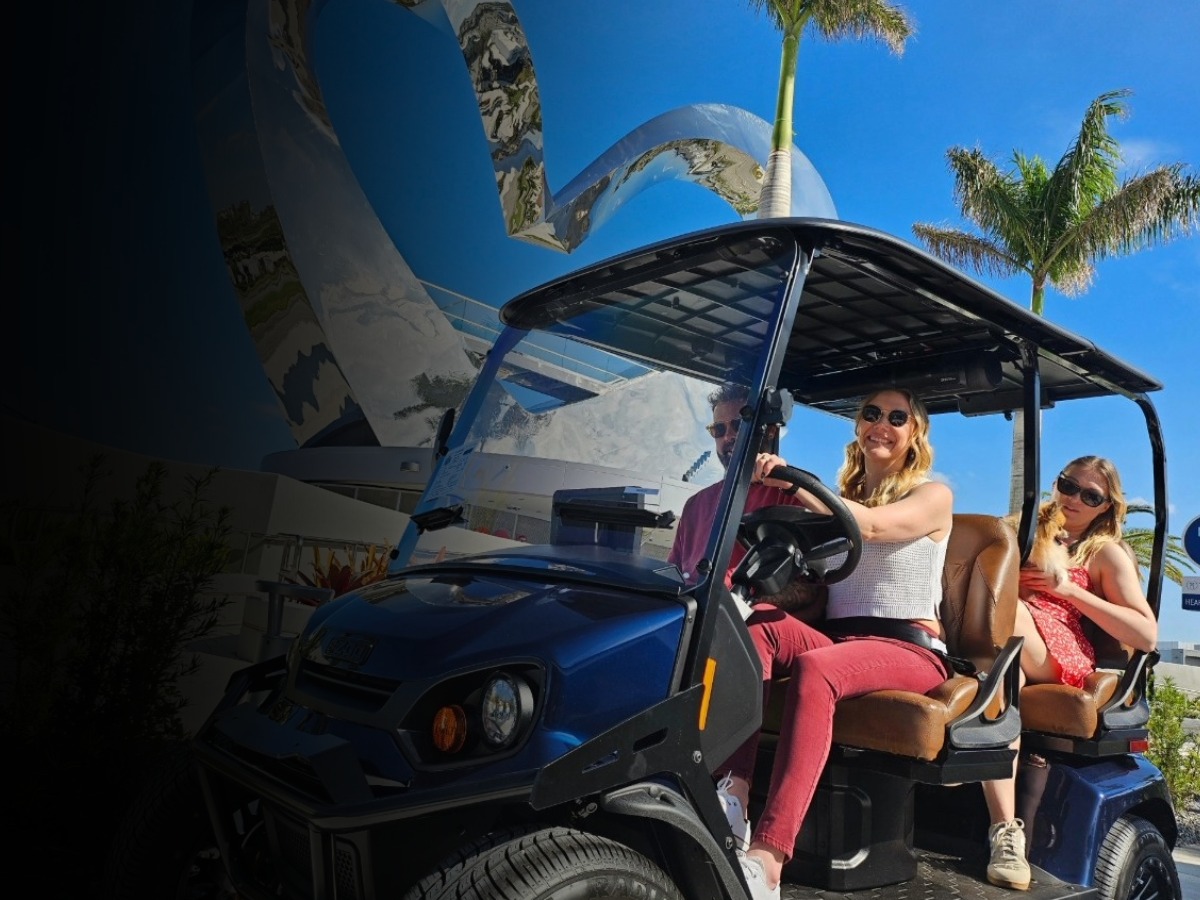
Street Legal Golf Carts – In Port St. Lucie & Ft. Pierce
The Difference Explained
This guide explains everything you need to know about Street Legal Low-Speed Vehicles (LSBVs) and what makes them different from a golf cart.
Table of Contents
Golf carts and low-speed vehicles can look nearly identical, but Florida law treats them very differently. A standard golf cart is generally limited to private property, approved communities and roads specifically authorized for golf-cart use.
WilDar Golf Carts & Trailers helps customers throughout Port St. Lucie, Tradition, Riverland, Fort Pierce and the Treasure Coast understand their options and choose the right vehicle for where and how they intend to drive.
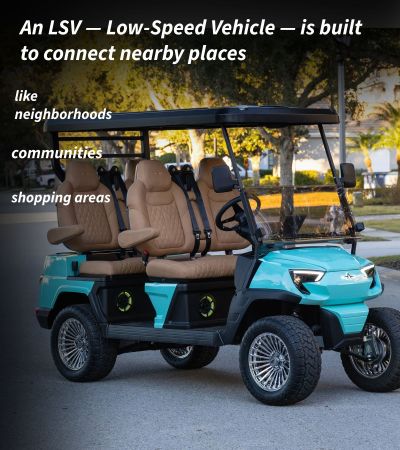
Street Legal LSV more than a golf cart
Street Legal Low Speed Vehicle
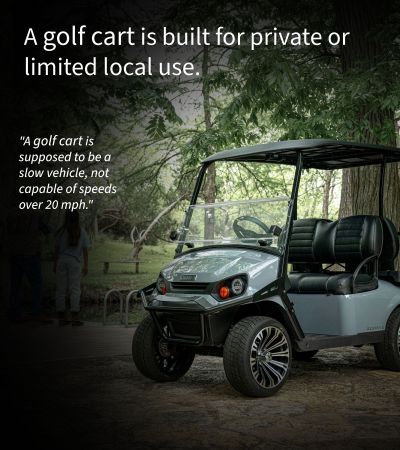
Golf Cart
Safety Requirements and Top Speed – Primary Differentiators
An manufacturer certified Street Legal LSV is designed and equipped for public-road travel, with a top speed of 25 mph.
Federal LSV Safety Standards are Required and certified to conform
A golf cart is designed for short-distance use on golf courses, private property, and speeds less than 20 mph.
No requirments for safety equipment or quality of components.
What Are the Federal Requirements for a Certified Low-Speed Vehicle?
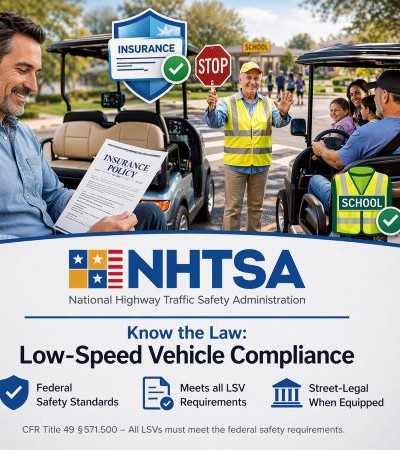
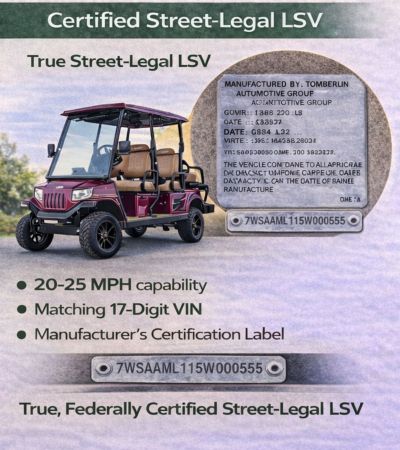
NHTSA’s federal standards apply to vehicles originally manufactured and certified as low-speed vehicles.
Low-Speed Vehicles and Golf Cart FAQ’s – Where Can I Drive Them?
In Florida, LSVs are generally limited to roads posted 35 mph or less, but cities, counties, communities, and road authorities can affect local access, routing, and restrictions.
Golf carts are generally limited to private property, golf courses, approved communities and public roads that have been specifically designated for golf-cart use by the local government.
The practical answer is this: you can drive an LSV on approved neighborhood streets, community roads, and local roads posted 35 mph or less.
Just not on highways, sidewalks, walking paths, or roads where the posted speed limit is too high.
Generally, no. A regular golf cart cannot simply be driven on sidewalks. Florida law only allows golf carts on sidewalks when the local government has specifically approved golf cart use on designated sidewalk segments. The City of Port St. Lucie has designed and posted that some sidewalks are available for golf cart use.
Before operating a golf cart or low-speed vehicle, confirm the current requirements with the City of Port St. Lucie, St. Lucie County, the Florida Statutes, and any applicable law enforcement or registration authority.
Florida – Golf Cart to LSV Conversion Process
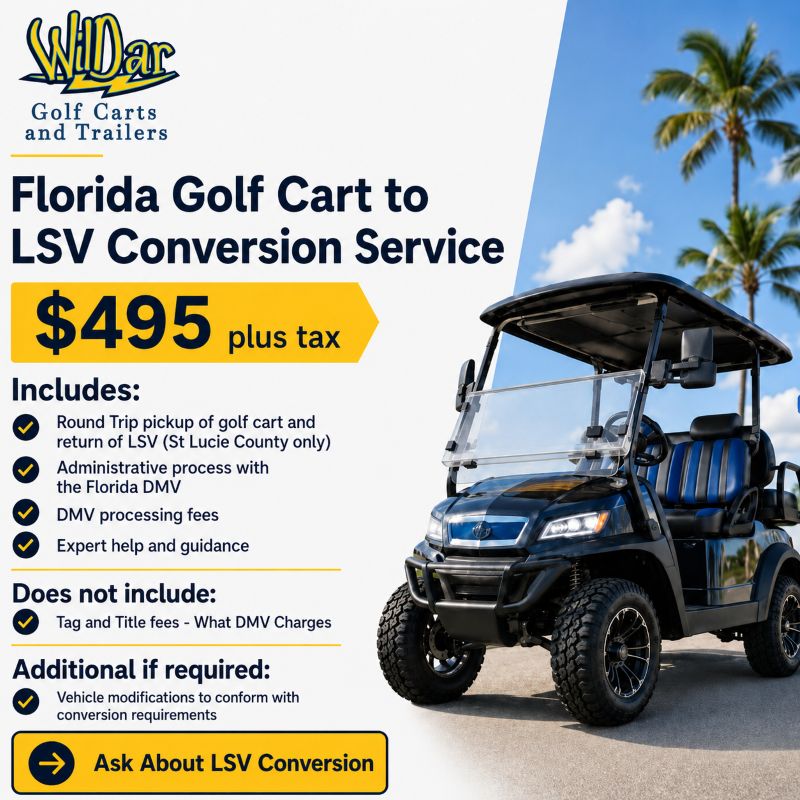
WilDar offers golf cart to street legal conversion services through the DMV conversion process. For only $495, our service includes local round-trip pickup and return for the vehicle, Florida DMV document and paperwork administration, and expert help throughout the process.
DMV tag and title fees are additional. If required, we also offer LSV upgrades services.
How Much Does LSV Insurance Cost?
Insurance for both golf carts and LSVs offers affordable peace of mind and protection. Some buyers worry that insuring an LSV will make ownership too expensive. In reality, insurance for street legal golf carts typically costs less than most people think.
Many buyers find LSV insurance to be reasonably affordable compared with a full-size car. A recent poll of average policy showed $388 average for recent policies including quoted coverages of :
- Liability (Bodily Injury): $100,000 / $300,000
- Property Damage: $100,000
- Uninsured Motorists: $100,000 / $300,000
- Personal Injury Protection: $10,000
- Towing & Emergency Expense: $75
- Includes Accessories: $1,000 limit Personal Effects: $1,000 limit
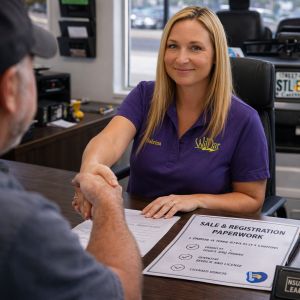
Low-Speed Vehicle Titles, Registrations and Tags
WilDar, is a licensed Franchise Dealer for low-speed vehicles since 2014. Our tag and title department has unmatched expertice and knowledge.
We handle the paperwork for you tag and title work for you.
We estimate DMV tag and title fees, process the paperwork for you, and refund the difference when it’s less.
- Fast and Professional Title & Registration Services
- Temporary Tags Available
- Street legal golf carts Compliance Knowledge
Is street-ready the same thing as street-legal?
No, street-ready without everything an LSV has just describes a golf cart.
Do you need a driver’s license to drive an LSV in Florida?
Yes, a drivers license is required to operate an LSV on public roads.
How long does it take to get my tag and title when I buy an LSV?
With purchase and evidence of insurance, WilDar can issue a temporary tag on the spot. Permanent plate is usually obtained within a week.
Your Local Source for Street Legal Golf Carts and LSVs in Florida
Understanding the law is only part of choosing the right street legal vehicle. WilDar Golf Carts & Trailers helps customers compare golf carts and LSVs, determine where a vehicle can legally be driven, evaluate conversion eligibility and complete the title, registration and tag process when applicable.
We offer new street legal LSVs, WilDar Customs vehicles, quality pre-owned E-Z-GO carts and Florida golf-cart-to-LSV conversion services. Customers who purchase an LSV from WilDar receive local assistance with insurance documentation, title and registration paperwork, estimated state fees and temporary-tag issuance when available. Our Fort Pierce service department also provides ongoing parts, accessories, repairs and pickup-and-delivery support.
Visit our Port St. Lucie or Fort Pierce location, shop our available street legal LSVs, or contact us to determine which option best fits where and how you plan to drive.
- Florida-licensed dealership
- Title and registration assistance
- Temporary tags available
- Golf-cart-to-LSV conversion services
- Local parts and service department
- Pickup and delivery in St. Lucie County
