
Best Golf Cart
Brands (2026
Buyer’s Guide)
Compare golf cart brands, understand the
differences, and choose the right cart for how
you actually plan to use it.
Looking for the best golf cart brands? The market has changed fast—and not all carts are built the same.
Over the past several years, explosive demand has driven innovation, new technology, and a flood of new brands into the market. The result? More options than ever—and more confusion for buyers trying to make the right decision.
Lithium batteries have largely replaced lead-acid, and features like backup cameras, large displays, and Bluetooth connectivity are now expected. At the same time, Low-Speed Vehicles (street-legal golf carts) have grown in popularity, as more buyers use them for short trips on public roads in place of traditional cars.
But here’s the problem: dozens of new brands—many imported or re-labeled—have entered the market alongside long-established manufacturers like E-Z-GO and Club Car. Not all are built to the same standards.
2026 feels like a turning point in the golf cart industry. Rapid growth is starting to shake out—and the difference between true quality brands and everything else is becoming clearer. So how do you know what’s worth buying?
This buyer’s guide breaks it down—clearly, honestly, and based on what matters.
How to Think About the Market
Not all golf cart brands are created equal—and not all of them hold up once they’re in real-world use.
After years of selling, servicing, and supporting carts across every tier of the market, certain brands consistently stand out. These are the ones that deliver where it matters: build quality, reliability, support, and long-term ownership experience.
Brand groupings are based on generally comparable price range, quality, and features.
Real-world experience shapes what you’ll read here. At WilDar, we don’t just sell golf carts—we service, repair, and support them every day.
Proven OEM Platforms
These are the brands that built the golf cart industry.
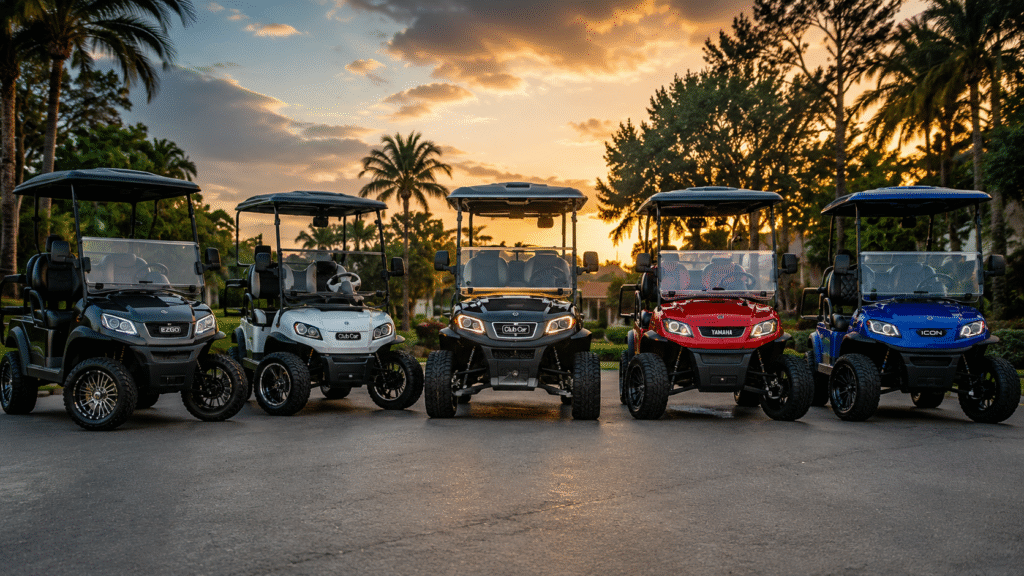
E-Z-GO, Club Car, and Yamaha Golf-Car Company have produced commercial-grade vehicles to American standards for decades—many of which are still in service 20–30 years later.
Their reputation was built in fleet and commercial environments, where reliability isn’t optional—it’s required. That track record still carries weight today.
What’s changing is the market around them. Modern buyers now expect lithium batteries, better ride quality, integrated technology, and even street-legal capability. That shift has pushed these legacy manufacturers to reinvest after years of slower innovation.
A major advantage of brands in this tier is long-term support. Established dealer networks, consistent parts availability, and proven serviceability are still strongest here—and that matters more than most buyers realize, especially a few years down the road.

E-Z-GO
E-Z-GO has consistently delivered one of the lowest total costs of ownership in the industry. That’s even more true today with the success of their fully integrated Samsung lithium battery platform. Historically, E-Z-GO’s strength came from fleet and commercial applications. That foundation built a reputation for reliability—but left consumer models behind in features and comfort for a long time.
That has now changed. In 2026 E-Z-GO has made a major push into the consumer market, investing in updated styling, premium seating, ride quality, storage, and technology packages. Early 2027 previews look promising as E-Z-GO unveils exciting new products, models, and expanded model offerings in the street-legal LSV category.
Bottom line:
One of the most balanced and proven platforms on the market—with strong dealer support and long-term reliability that makes it a very safe place for most buyers to start.

Club Car
Club Car’s premium feel and strong reputation for build quality appeal to buyers looking for fit, finish, and brand recognition. Like E-Z-GO, their reputation for reliability, dealer network strength, and parts availability is excellent and well-earned. The aluminum frame has always been Club Car’s claim to fame and is often mentioned by shoppers comparing brands. This iconic manufacturer’s core business is also commercial golf course carts, and similarly, Club Car has renewed its interest in the consumer market.
Club Car’s dealer network is solid, and parts availability is good to great—certainly on par with E-Z-GO. Some lithium-related reliability concerns have been noted, but Club Car is clearly Tier 1 and jostling as usual with E-Z-GO for best-of-the-best ranking. That’s unlikely to change.
Club Car vs E-Z-GO
No golf cart brand comparison would be complete without addressing one of the most common questions that buyers start with – Is an aluminum frame better?
Club Car is known for its aluminum frame, while E-Z-GO uses steel. Frankly, the aluminum vs steel debate has been going on for decades—not just in golf carts, but across the entire automotive world.
Some will tell you aluminum is lighter and won’t rust. Others will argue steel is stronger and easier to repair. The truth is, both have proven themselves over time.
A simple way to think about it: it’s a lot like Ford vs. Chevy. Ask ten people which one is better, and you’ll get ten different answers—usually based on what they’ve owned or had a good experience with.
At the end of the day, both brands are established, reliable, and capable. The better choice usually comes down to what fits your priorities, how you plan to use it, and what feels right to you.

Yamaha Golf-Car Company
Yamaha golf carts are one of the Big 3 and clearly belong in this tier. The brand has earned a strong presence in the commercial golf course market and is known for solid mechanical reliability. Their gas engines, in particular, have a reputation for being quiet and exceptionally smooth.
That said, in today’s consumer market, Yamaha has been slower to adopt newer features, technology, and electric-focused innovation compared to other OEMs.
A Different Kind of Vehicle:
Premium Street-Legal LSVs

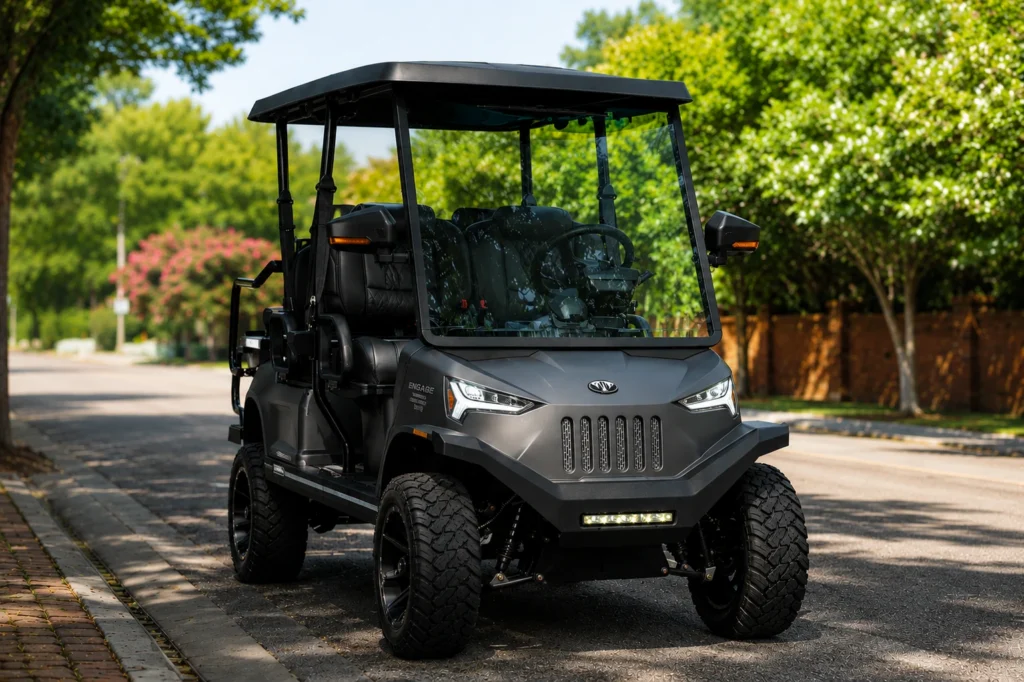
Tomberlin sits in a very different category than any other. Tomberlin builds true street-legal LSV vehicles in the USA from the ground up. A strong focus on safety, compliance, and an automotive-style driving experience create a very loyal brand following. If BMW, Porsche, or Land Rover appeals to you, then Tomberlin fits that mindset.
They are also priced accordingly—typically in the upper $20k to lower $30k range—which naturally puts Tomberlin into a low-volume, premium segment. These aren’t impulse buys or “value” purchases. The buyer here is usually looking for the best overall experience and is willing to treat themselves to it.
Tomberlin and parent company Columbia are rock-solid and have consolidated both brands in a new manufacturing plant in Aiken, South Carolina, placing them among the few brands that are truly Made in the USA. The iconic Tomberlin E-Merge models are still in production, but the redesigned and updated Engage is peerless. Tomberlin bridges the gap between today’s best street-legal LSVs and performance/luxury automobiles while retaining the convenience of that “jump in and have fun” golf cart experience.
Not every vehicle fits neatly into the traditional golf cart tiers. This is one of them. But does Tomberlin fit into a best brands conversation – absolutely.
Quality, Feature-Rich Hybrid Brands
These carts typically bring modern designs, strong features, and a noticeable step up in fit and finish over the high-volume imports. Pricing usually lands between the legacy OEMs and the less expensive import brands. On paper, it’s a very attractive place to shop.
This tier is also where the market really starts to blend with the balance of the domestic/import mix varying by brand. The real mix isn’t always fully transparent—and is often still evolving.
But this tier is hybrid in more ways than one.
You’ve got brands here that are building things the right way—investing in components, support systems, and long-term infrastructure. And right next to them, you’ve got others that look just as good on the surface but haven’t fully built out what it takes to support the product long-term.
That’s why this category can be tough to judge at a glance.
The real differences don’t show up on the showroom floor—they show up over time. Parts availability, supply chain consistency, technical support, and how warranty claims are actually handled… that’s where the separation happens.
In this tier, a strong dealer isn’t optional—it’s critical.

Bintelli Electric Vehicles
Bintelli aligns well with the Tier 2 profile: domestic brand with hybrid manufacturing, modern design, and in-between pricing. Repairs of this brand have revealed solid, quality components and good-looking, well-equipped golf carts.
In our own in-shop experience, parts support has been the biggest concern. Delays and difficulty sourcing parts can affect service turnaround, which matters once the cart is out in the real world.
Overall, Bintelli offers a compelling product on the surface, but long-term ownership experience is highly dependent on support—and that’s where regional inconsistency can show up.

Epic Golf Carts
Epic looks the part in this tier—sharp, feature-rich, and priced accordingly—but there are a few considerations beyond the first impression. The look, feel, features, and pricing all align well with Tier 2 expectations. At the same time, it’s still a relatively new brand with a short track record. Some ownership and affiliation overlap with ICON Electric Vehicles that’s worth being aware of.
Like others in this category, the long-term ownership experience is heavily dependent on the strength and capability of the local dealer.
Overall, Epic presents as a polished, higher-end option in this tier—but long-term confidence ultimately comes down to support structure and dealer execution.

Epic Golf Carts
Epic looks the part in this tier—sharp, feature-rich, and priced accordingly—but there are a few considerations beyond the first impression. The look, feel, features, and pricing all align well with Tier 2 expectations. At the same time, it’s still a relatively new brand with a short track record. Some ownership and affiliation overlap with ICON Electric Vehicles that’s worth being aware of.
Like others in this category, the long-term ownership experience is heavily dependent on the strength and capability of the local dealer.
Overall, Epic presents as a polished, higher-end option in this tier—but long-term confidence ultimately comes down to support structure and dealer execution.
Not sure where you fall?
High-Volume Import Brands
(Feature-Heavy, Support-Light)
This segment has grown faster than any other category in the golf cart market over the past five years.
The formula is simple—and effective: High feature counts—lights, screens, wheels, and accessories—combined with aggressive styling and lower upfront pricing. On the surface, they offer a lot for the money. And that’s exactly why they’ve gained so much traction so quickly. Tier 3 brands build around high-volume import models, where speed to market and dealer expansion come first. Infrastructure like parts availability, technical support, and warranty execution has to catch up after rapid growth—with mixed results depending on the brand, region, and dealer.
This category is defined as much by what you see on day one as what happens after the sale.
Delays in parts availability can extend downtime for critical repairs. Mass production can also impact serviceability, with simple failures often requiring full assembly replacement. Wide disparity of consumer experience is broadly reported on social media largely due to variability in dealer and manufacturer support.
Several brands in this category have also drawn increased scrutiny from U.S. Customs and Border Protection, which adds another layer of uncertainty for buyers evaluating long-term stability and support.
A best brands shopping guide would not be complete without inclusion of the sales volume leaders. This is mass production segment that is built around value and features upfront. For some buyers, a price tradeoff makes sense. But it’s important to understand that in this tier, long-term ownership experience—particularly service, parts, and support—can vary significantly compared to upper-tier products.

Icon EV
ICON Golf Carts was a strong early entrant with eye-catching colors, lots of features (for the time), aggressive pricing, and easily variable speed. There’s no question ICON helped define the model for this segment early on. With a blueprint for sales success, others soon followed the model. ICON EV now has a longer track record in the U.S.—and that history has revealed consistent patterns particularly around long-term ownership and support.

Evolution Electric Vehicles
Evolution Electric Vehicles was ICON’s main competitor in this segment early on with the venerable Classic series. Evolution hit its stride with the introduction of the popular D5 model lineup in early 2023. This model introduction began a couple of years of market dominance with market-setting low prices and with large volumes of carts entering the market.
Denago EV
A more recent entrant into the market with a very familiar playbook—strong feature sets, modern styling, and aggressive pricing designed to compete directly with earlier high-volume imports. Reported early ownership experience tends to mirror what we’ve already seen from this category. The carts present well upfront and check a lot of boxes for buyers, but longer-term considerations like parts availability, serviceability, and warranty consistency are still developing. That’s not unusual for a fast-scaling brand. The real question will be how well their support infrastructure matures as their installed base grows.

Dach Vehicles
A more recent entrant into the market with a very familiar playbook—strong feature sets, modern styling, and aggressive pricing designed to compete directly with earlier high-volume imports. Reported early ownership experience tends to mirror what we’ve already seen from this category. The carts present well upfront and check a lot of boxes for buyers, but longer-term considerations like parts availability, serviceability, and warranty consistency are still developing. That’s not unusual for a fast-scaling brand. The real question will be how well their support infrastructure matures as their installed base grows.
Low-Volume / Private Label Brands
This is where the golf cart market becomes the most difficult to navigate. Over the past several years, dozens of new brand names have entered the space—many of them low-volume, regional, or private-label imports that aren’t widely recognized outside specific dealerships or local markets.
In many cases, these carts are built on shared platforms and sold under different names, making true comparisons difficult for buyers. While they can offer appealing features and aggressive pricing, consistency in build quality, parts availability, and long-term support can vary widely.
At this level, the badge on the cart often tells you very little. What matters most is who sold it to you—and whether they’ll be there to support it after the sale.
Dozens of brands fall into Tier 4—a mix of new names, regional players, and private-label imports. Most are built on the same underlying platforms you see in Tier 3, just brought to market with less development and support behind them.
There’s very little truly new happening here. In most cases, you’re not choosing between fundamentally different products—you’re choosing between versions of the same idea.
Dealer support matters more here than anywhere else—but it’s not all equal. Some dealers are committed to the products they sell and invest in parts, service, and long-term relationships. Others simply rotate through brands based on whoever is offering the lowest cost at the time.
That combination—a low-volume brand paired with a low-commitment dealer—is where buyers should be most cautious.
So… What’s the Best Golf Cart Brand?
The truth is, there isn’t a single “best” golf cart brand—only the best fit for how you plan to use it.
- Some buyers prioritize long-term reliability and proven platforms.
- Others want modern features and value.
- Some are focused on price, while others want a fully built, street-legal vehicle designed for real-world use.
The key is understanding the differences—and choosing based on what actually matters, not just what looks good on the surface.
Our Approach
We’ve worked with just about every type of cart and buyer scenario. Our job isn’t to push you toward one brand—it’s to help you understand the differences and choose the right fit the first time.
Because once you understand how the market is structured, the decision becomes much clearer.